One of the few things about which La Profesora and I disagree is the purpose of writing. I contend that all writing is about persuasion—about getting your way. She disagrees. It’s likely that we disagree on the definition of “persuasion,” but we haven’t dug that deep.
My mother, one of the other leading ladies in my life, doesn’t acknowledge any daylight between the words “persuasion” and “manipulation.” For Mom, all persuasion is enemy action. Ironically, she still enjoys this newsletter from time to time.
My daughter, the third of my leading ladies, has her own, distinctive newsletter, “Writing My Wrongs.” I can tell you that I would recommend it even if she weren’t my daughter, but you probably won’t be persuaded. Please see for yourself: a click is a small thing to ask.
Of all genres of persuasive writing, the most misused and misunderstood is the email subject line. I have inveighed against the despicable, irredeemable practice of notchanging an email thread’s subject line when one changes the topic here. This is the hill I will die on, but I don’t need to reiterate the whys and wherefores today.
Every email wants you to do, to read, to reply, to buy, to forward, to set up a meeting, to cancel a meeting, or (and this aggravates me) to take a survey about every economic transaction no matter how small. If a business emailed me a receipt with the message, “we hope you had a good time, but we want you to spend three minutes on something you care about rather than give us a good grade as we try to manipulate Yelp,” I’d be loyal forever.
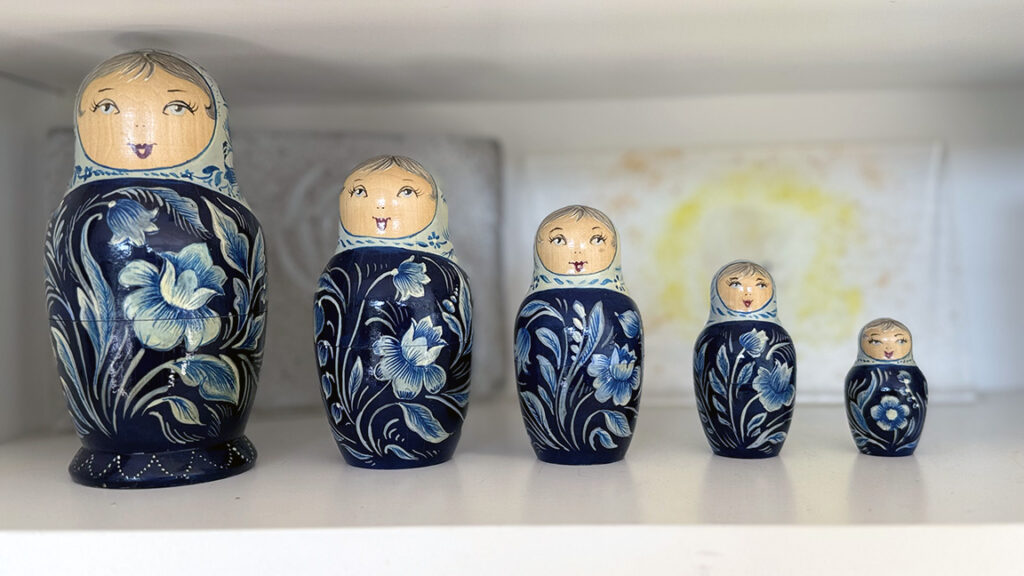
Effective, persuasive email looks like Russian dolls in reverse. Ordinary Russian dolls start with the largest and then uncover smaller versions until you reach the tiny one. (This is also the logic of George Carlin’s deathless 1981 routine, “A Place for My Stuff.”)
With email, the reverse Russian dolls, you start with the tiny doll—the email subject line—and expand narrative scope with each step.
People review a lot of email on their smartphones, and subject lines have less space on phones.
Once, when I ran a marketing department, during Creative Review I shocked the team to their very souls by forwarding subject lines for email campaigns to my iPhone and then pointing out that the recipients would only see throat-clearing drivel. “Try again.”
You have less than 40 characters
In email subject lines, you have less than 40 characters to tell the tiny doll’s story. All your power words need to be inside that boundary, although really it’s 35. A boldfaced (unread) email subject line on a phone has on average 38 characters before you hit the dejecting “but wait, there’s more” ellipses. If the email is a reply, then you lose three characters to the “Re:”. If it’s a forward, then you lose four characters to the “Fwd:”.
Subject lines also need to be humble. You should presume that your correspondent cares more about a crumb on the table in front of her than about your message and wants only to be done with it forever.
When I’m recruiting speakers for an event, my subject lines look like this:
Cannes, June 23: Speak at [whatever group, whatever place].
The first 22 characters contain where (Cannes), when (June 23), and what (a speaking invitation). Why is this humble? I’m presuming that my correspondent’s first thoughts will not be, “Oh, Brad. He does great events; what a privilege!” Hah. No. Instead, those first thoughts will be, “Cannes? Sure I’ll be there… June 23rd? Hmm, I have a thing in the evening, but maybe I can do this too if it’s early-ish….” If my correspondent can’t do it, then she or he can move on to her next email or send a quick, “sorry, busy, next time?” reply.
The next doll is an efficient summary of all the email’s details, adding the why, how, and who to the story. This too is an offramp for my correspondent. “That doesn’t sound like fun” then provokes the quick reply.
The doll after that unpacks those details and provides more information, including next steps if the answer is yes. The biggest doll is all the other information that’s relevant to the event, all situated below my email signature so that the curious can see there’s substance behind the speaking invitation even if they don’t scroll down.
This logic applies to every email, not just speaking invitations.
It’s hard to tell a story in 40 characters. The effort you spend decanting your story into that tiny space makes it more likely that you’ll persuade your correspondent.
Note: To get articles like this one in your inbox, plus many more goodies and things worth your attention, please subscribe to my free weekly newsletter.
* About the image: I bought these Russian, or “Matryoshka,” dolls in Moscow on a college trip there during the waning days of the Soviet Union. They’ve been on display ever since.
Leave a Reply