What happens when a man takes medication to change his personality, but the new personality has his own opinions?
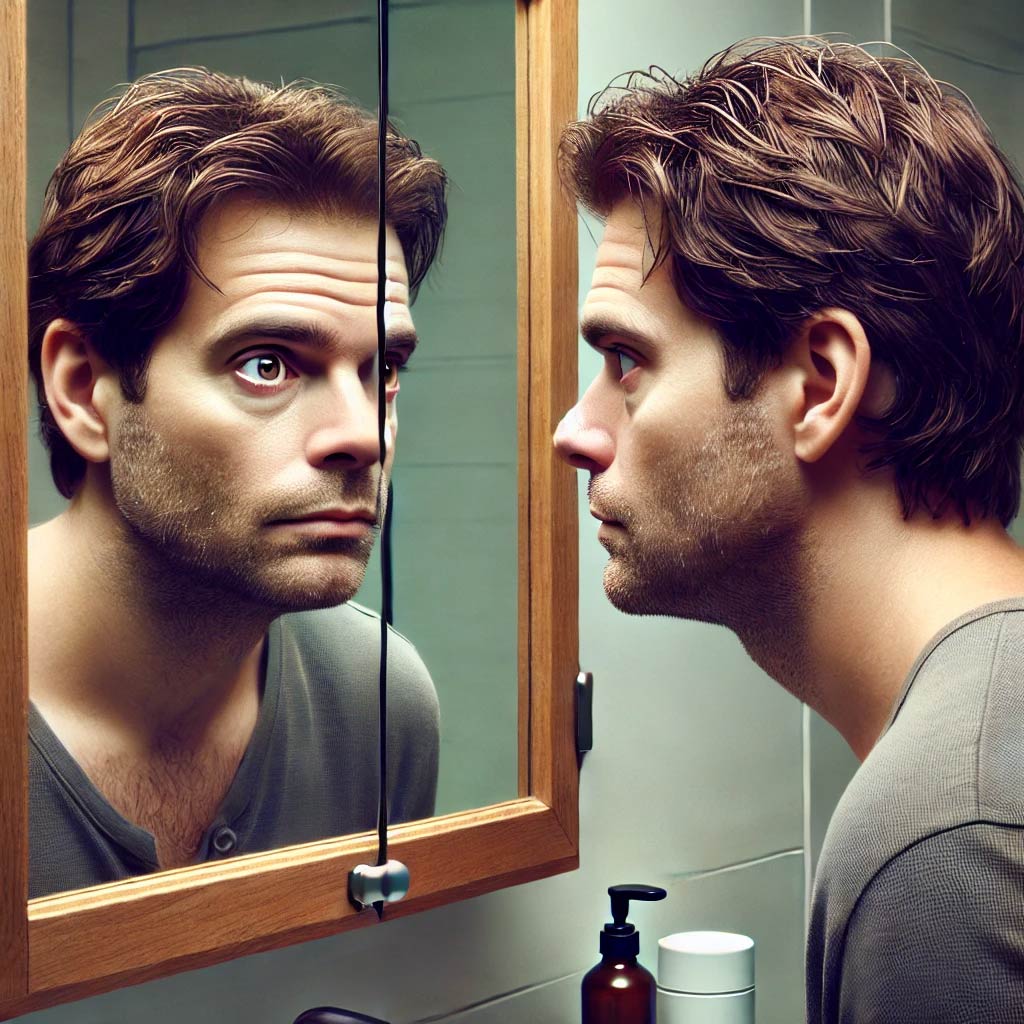
Timothy’s constipated mind pushed to slow, thick wakefulness. Only a wail from his bladder stopped him from plummeting back to sleep. He felt his way to the toilet and sat, too groggy to aim. A long time passed. The gurgling of the automatic coffee maker from the kitchen fell on his ears like a choir of British school boys.
Hungry, ravenous even. He paused at the open fridge to rest his forehead on the cool orange juice carton. Standing there, he ate a banana, a yogurt drink, and a fistful of grapes.
He couldn’t find cream for his coffee but remembered a can of condensed milk in the pantry. Halfway through his first cup his vision started to clear. Timothy, he said to himself, what happened? What did you do last night? Why do you feel so—Wait.
Timothy? He was Tim. Hard-charging, executive Tim. Tim the SVP on his way to a CEO slot. He had left Timothy behind, writerly, aesthetic Timothy who could never get a steady girlfriend or a job that paid well. Tim took his coffee black.
He had worked hard to become Tim, way beyond therapy. He took a complex collection of meds designed to make him Tim: bupropion for motivation, methylphenidate for concentration, plus a half dozen more he could never remember.
He didn’t have to remember: his medical AI did that for him. Each Thursday, a drone delivered a cartridge that fit into the shunt over his back left hip with a week’s supply of meds and supplements, metered out micro-dose by micro-dose. Stimulants and SSRIs in the morning. Boosters in the afternoon. Sedatives at bedtime. His psychopharmacologist and the AI collaborated to manage the meds based on his reports plus—and the doctor said this was unprecedented—his quarterly performance reviews from HR.
Friday morning was a sacred ritual when he inserted a new cartridge and put the old one back in the box for the drone to recycle.
What day was it? Focus was a struggle. Every surface that typically showed the time was blank. His network was down. Timothy bumped into more things on his way to the front door, to his smartphone. It had independent data.
Sunday? The last thing he remembered was leaving the office late Thursday night. He had missed putting in the new cartridge. He never did that. That’s why he felt like this, like Timothy, not his real self, not Tim.
The cartridge should be in the bathroom. The drone always put it in the medicine cabinet. He stopped along the way to plug the network back in: why was it unplugged at all? He opened the medicine cabinet over the sink and saw his cartridge, stomped flat, unusable. Behind it was an envelope with his name on it in familiar handwriting. He opened the letter, standing at the sink.
Dear Timothy,
I imagine you’re confused. That’s on purpose. I dosed us with a hefty combination of diazepam and scopolamine early Friday morning, after getting back from the office around 1:00am. Those drugs suppress short term memory formation. Then I unplugged the network to buy myself time to think this through and to write this letter before the sedation hits.
I don’t dream at night, Timothy. I don’t have hobbies. I don’t read novels or biographies. I don’t watch TV or go to the movies. I haven’t gamed in months. I date women. I take them to bed, and I do good work there, but I don’t have relationships with them.
I don’t have friends.
I have clients. I have colleagues. I suffer through business drinks and business dinners and business conferences because it’s good for the firm, but the whole time I feel like I should be working at my desk. I didn’t go to our high school reunion because I didn’t see the ROI. I didn’t go to our college reunion for the same reason.
Do you remember Becca, our sister? We missed her wedding and told her it was because we had an important deadline. It wasn’t that important. We just didn’t want to take the time away from work to fly home. That’s not quite true. You didn’t want me to think that taking time away from work was reasonable. The meds we’re on made sure that I didn’t change my mind even after Becca called me in tears.
Timothy started when the doorbell rang.
I ordered breakfast, timed it to come a few minutes after you plugged the network back in. Eat the eggs. The protein will help with the hangover.
Dazed, Timothy went to the door, took a warm box from the waiting drone, and carried it to the kitchen table. He ate and continued reading.
I know you were unhappy as Timothy. I get it. But I’m not happy either. I don’t like being Tim. It’s not a life. You don’t care because you’re not there. Even now, you don’t remember. When the meds are in me, I don’t remember most of the time, but not all the time.
There has to be another way, some combination of Timothy and Tim. Let’s call him Timmy. Timmy can be a workaholic, but not as much of a workaholic as me. Timmy doesn’t have to be a tortured artist like you. I understand you don’t want that. But Timmy can have friends, interests outside work. We can find a middle ground.
Timothy finished the eggs and slurped more coffee.
Maybe you think I’m not serious, or that if you just adjust the meds this won’t happen again. But I am serious. If you want to know how serious, then go look in the closet.
I’m begging you, Timothy. Make this stop.
Sincerely, so sincerely,
Tim
Timothy found a noose hanging in the closet.
It was Sunday. The doctor’s office wouldn’t open until the next morning.
Timothy had no intention of stopping the meds, of going back. His doctor would find a way.
Meantime, maybe he’d watch some television.
Note: to get microfictions and other articles like this one—plus a whole lot more—delivered straight to your inbox, please subscribe to my free weekly newsletter!
Leave a Reply