What happens when somebody invents an enemy nation?
I’ve been experimenting with microfictions, short SF stories (1,000 words or less) that help me explore and illustrate aspects of how our lives might evolve within the technology transformations happening all around us.
Here, then, is another microfiction, “Best Laid Plans.” Next time, I’ll dig into how realistic this story is.
Theorizing that the best way to unite a divided people was for them to have a common enemy, Piers Elder invented one.
The Toynbeeians came from the small island country of ToynbeeLand, located somewhere between New Zealand and Argentina. A series of Botany Bay expeditions with incompetent navigation misfired, landing convicts and other British undesirables on an unimpressive coast. These undesirables, not being the brightest, thought they were in Australia.
Over decades, the English and other Europeans interbred with the native population and merged into one culture, a gray amalgam with no distinct physical characteristics other than a vague resemblance to cartoon Neanderthals.
There were no Toynbeeians. The story was the product of Elder’s imagination. He meant it as a metaphor about intolerance. If he could rally Americans against imaginary foes, then perhaps he could make them see how wrong other forms of intolerance were.
Using AI, Elder created a realistic geography complete with cities, towns, harbors, agricultural areas, and more.
His Toynbeeians absorbed ethnic and racist jokes from all other groups. Stupid but crafty, criminal, and ready to steal. The men were lazy but rapacious, especially against foreign women. The women were foolish, but promiscuous.
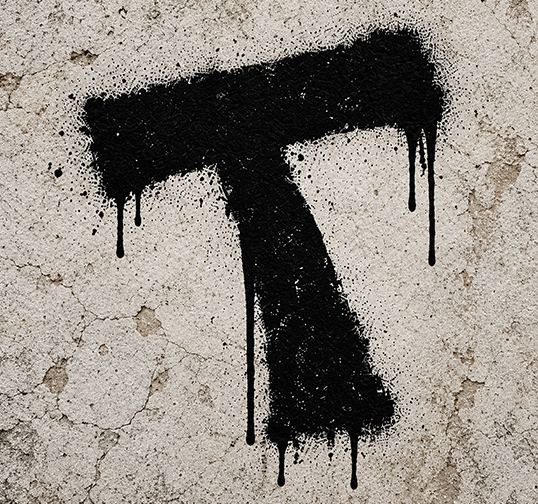
The flag of ToynbeeLand was a rough-hewn capital T that sagged to the left, which lent itself to “No Toynbeeians” treatments with a circle and slash through the deflated T.
At first, it worked! The Toynbeeians inspired thoughtful conversations on Sunday morning talk shows about the politics of tolerance and intolerance. With an election coming up, some left-leaning candidates began talking on the stump about welcoming everybody, even Toynbeeians.
Then came problems. A handful of less nuanced talk-radio shows and podcasts talked about Toynbeeians as if they were real—infiltrating America, kidnapping children to kill and eat them, the blood libel reborn.
It got worse. Disaffected Americans began to identify as Toynbeeians. “We Are Toynbee!” became a rallying cry. Lopsided T’s began to appear everywhere: on t-shirts, graffiti, even one high fashion house had a Toynbee Collection with runway models wearing makeup that made their brows look primitive. There was even a vogue for self-branding the T on a left bicep.
Piers Elder had never pretended the Toynbeeians were real. He had always been transparent that this was a fiction, a metaphor, a rhetorical exercise.
“Toynbeeians don’t exist!” he would maintain on talk shows. “I made it all up. There is no ToynbeeLand. Look at satellite photos: there’s nothing there!”
“Satellite photos can be altered,” came the consternating response.
For people identifying as Toynbeeians globally, Piers Elder became Public Enemy #1.
He went into hiding.
The end came during his trial at The Hague for war crimes against the Toynbeeians.
His security detail was escorting Elder back to his hotel. (He had been released on a $20 million bond that a sympathetic businessman, who was making buckets of money on Toynbeeian merch, had loaned him).
“We Are ToynbeeLand” activists got the drop on the guards with stun guns.
The activists put Elder against the wall and branded him with the Toynbee T that he had invented, but instead of his arm they branded his forehead. The agony and terror triggered a heart attack for Elder. As he collapsed clutching his arm, the activists fled. The heart attack proved fatal because Elder’s guards were still unconscious.
Through the searing pain in his head and chest, as his light dimmed, Elder could only think to himself, and mumble as he died, “I was trying to help!”
Note: To receive stories like this one—plus a lot more goodies and things worth your attention—subscribe to my free weekly newsletter.
* Image Prompt: Please design three versions of the stylized “T” described in this short story: “Best Laid Plans, a Microfiction.” I then pasted the entire story into the prompt box and chose the option you see above.
Leave a Reply